You cooked the turkey, the house smells like a Norman Rockwell painting, and everyone’s hovering for “just a taste.” The secret to shutting down the side-eye? A silky, glossy thanksgiving gravy with drippings that tastes like you spent all week perfecting it. This is the sauce that rescues dry turkey, elevates mashed potatoes, and earns you that slow nod from your toughest critic.
No gimmicks—just technique, timing, and an unapologetic focus on flavor. Ready to turn pan bits and turkey juices into liquid gold? Let’s make your holiday table unstoppable.
What Makes This Special
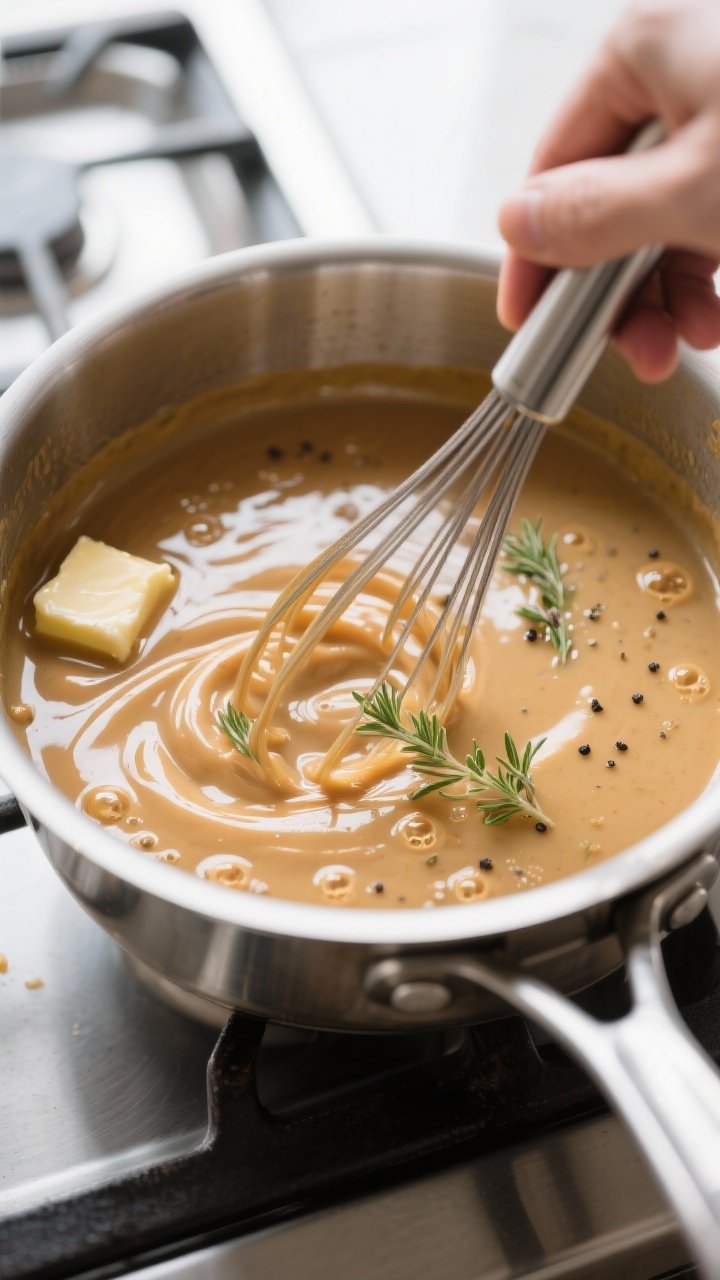
This gravy pulls every ounce of caramelized flavor from your roasting pan—those sticky brown bits (fond) are where the magic lives.
With drippings, you get built-in seasoning and roasted complexity no boxed stock can mimic. The method is streamlined: make a roux, deglaze, whisk like you mean it, and season smarter. The result?
A gravy that’s rich, balanced, and smooth enough to pour like velvet. You can scale it for a small gathering or a full-blown family invasion. Plus, you’ll learn pro upgrades—like a splash of sherry or a knob of butter—to turn “good” into “whoa.”
What Goes Into This Recipe – Ingredients
- Pan drippings from a roasted turkey (including browned bits and juices)
- Fat from drippings (or unsalted butter if you need more), about 4 tablespoons
- All-purpose flour, 4 tablespoons (for a classic roux and medium-thick gravy)
- Low-sodium turkey or chicken stock, 3 to 4 cups (adjust for thickness)
- Onion powder or finely minced shallot, optional, 1 teaspoon or 1 small shallot
- Fresh thyme or sage, optional, 1–2 teaspoons chopped
- Sherry, dry white wine, or apple cider, optional, 2–3 tablespoons
- Worcestershire sauce, optional, 1 teaspoon for depth
- Salt and freshly ground black pepper to taste
- Butter, optional, 1 tablespoon to finish (for gloss and richness)
Let’s Get Cooking – Instructions
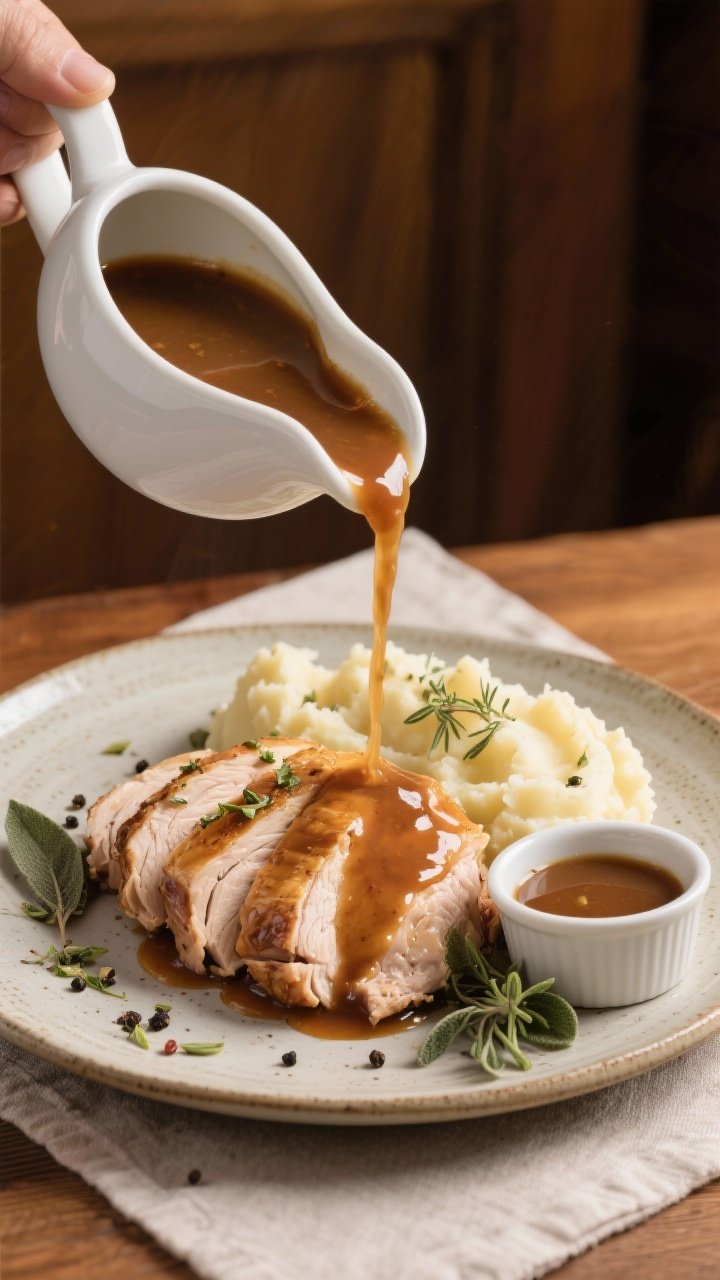
- Separate the drippings: Pour the contents of the roasting pan into a heatproof measuring cup.Let it sit so the fat rises. Skim off about 4 tablespoons of fat and set aside. Keep the remaining juices for the liquid base.
- Deglaze the pan: Place the roasting pan across two burners over medium heat.Add a splash of stock (or wine/cider), scraping up the browned bits with a wooden spoon. That’s flavor. Pour this deglazing liquid into your measuring cup with the juices.
- Build the roux: In a saucepan over medium heat, add the reserved fat (top up with butter if short).Whisk in the flour and cook 2–3 minutes until light blond and nutty. Don’t let it brown too much unless you want a deeper, slightly thinner gravy.
- Add liquid gradually: Slowly whisk in 3 cups of stock plus your pan juices and deglaze. Whisk constantly to avoid lumps.Bring to a gentle simmer.
- Season and layer: Add onion powder or sautéed shallot if using. Stir in thyme/sage. Add Worcestershire and sherry/wine/cider for complexity.Simmer 5–8 minutes until thick enough to coat a spoon.
- Adjust texture: Too thick? Add more stock, a little at a time. Too thin?Simmer longer or whisk 1 teaspoon flour with 1 tablespoon cool stock and whisk that in briefly.
- Finish like a pro: Whisk in 1 tablespoon cold butter off heat for sheen. Taste, then add salt and pepper. Remember your drippings may already be salty—season last.
- Strain (optional): For ultra-smooth gravy, pass through a fine mesh strainer.For rustic vibes, serve as is. Serve hot.
Preservation Guide
- Fridge: Store in an airtight container up to 4 days. Press plastic wrap over the surface to prevent a skin forming.
- Freezer: Freeze up to 3 months.Cool completely, portion into freezer-safe containers, and label. Thaw overnight in the fridge.
- Reheat: Warm gently over medium-low heat, whisking. If it separates, add a splash of stock and whisk until smooth.A small knob of butter helps revive shine.
- Make-ahead tip: If you’re cooking the turkey day-of, make a base gravy with butter and stock earlier in the week. On the big day, whisk in the fresh drippings and adjust seasoning.
Benefits of This Recipe
- Max flavor, minimal waste: You’re using every tasty scrap from the roast.
- Customizable: Adjust thickness, add herbs, or spike with sherry for restaurant-level depth.
- Foolproof method: A classic roux gives reliable body and a glossy finish.
- Versatile: Works with turkey, chicken, even roasted vegetables for a vegetarian twist (use mushroom drippings/stock).
- Budget-friendly: Drippings are basically free flavor. Why wouldn’t you?
Pitfalls to Watch Out For
- Over-salting: Drippings vary wildly.Always season at the end, not the beginning.
- Lumps: Add liquid slowly to the roux, whisking constantly. If you still get lumps, strain and pretend it never happened.
- Greasy texture: Skim excess fat before starting. You want richness, not an oil slick.
- Bitter fond: If the drippings are scorched, don’t use that portion.Better a clean flavor than a burnt one.
- Too thin/thick at service: Keep a little warm stock ready to thin. To thicken fast, simmer or use a tiny flour slurry. Easy fix either way, FYI.
Alternatives
- Gluten-free: Use sweet rice flour or cornstarch.For cornstarch, skip the roux: simmer stock/drippings, then whisk 1 tablespoon cornstarch with 1 tablespoon cold water per cup of liquid; add gradually until thickened.
- Dairy-free: Use only turkey fat or a neutral oil. Finish with olive oil instead of butter for gloss.
- No alcohol: Sub apple cider or extra stock plus a teaspoon of cider vinegar for brightness.
- Umami boost: Add 1 teaspoon soy sauce or miso. Keep salt modest as these are salty.
- Herb-forward: Steep a sprig of thyme, rosemary, and a bay leaf while simmering; remove before serving.
- Make it dark: Cook the roux to a deeper caramel for a nuttier, more robust gravy.Slightly thinner, but big on flavor.
FAQ
How much gravy should I make per person?
Plan on 1/3 to 1/2 cup per person. If your family drowns everything in gravy (respect), aim higher and make extra.
Can I make gravy without drippings?
Yes. Use butter or oil for the fat and a good-quality low-sodium chicken or turkey stock.
Add a splash of Worcestershire and a smidge of soy or miso for depth. It won’t be identical, but it’ll be delicious.
My drippings are super salty. Now what?
Use low- or no-sodium stock, don’t add salt until the end, and balance with a splash of unsalted stock or water.
A tiny squeeze of lemon or a bit of cider can help brighten and distract if needed.
Why is my gravy pale?
Your roux didn’t cook long enough, or the fond was light. Cook the roux to a slightly deeper blond, and consider a drop of sherry or a teaspoon of soy sauce for color and complexity.
How do I fix lumpy gravy?
Whisk vigorously over low heat and add a little warm stock to loosen. If lumps persist, strain through a fine mesh sieve.
Boom—silky.
Can I use the giblets?
Absolutely. Simmer giblets (except the liver) with onion, celery, herbs, and water for a quick stock. Chop the cooked giblets and stir in at the end if you like texture.
Old-school and fantastic.
What if I need to hold gravy for an hour?
Keep it warm over the lowest heat or in a warm water bath, covered. Whisk occasionally and thin with a splash of stock if it tightens. Finish with a dab of butter for fresh gloss right before serving.
My Take
Great gravy is the multiplier of a holiday menu: it makes good food great and great food legendary.
This thanksgiving gravy with drippings leans on fundamentals—roux, deglazing, smart seasoning—so you can flex flavor without stress. IMO, the small touches matter: finish with butter, strain if you want elegance, and add a splash of something bright for lift. Serve it hot, confidently, and watch the table go quiet for a minute.
That’s the sound of victory.
Printable Recipe Card
Want just the essential recipe details without scrolling through the article? Get our printable recipe card with just the ingredients and instructions.