You know that bright yellow, perfectly crunchy radish that comes with Korean fried chicken? The one you eat three pieces of and suddenly realize you have been completely ignoring the actual chicken? Yeah. That one.
That is Chikin Mu – Korean pickled radish – and it is about to become your new kitchen obsession. Sweet, tangy, crisp, and refreshing, it cuts right through rich and spicy dishes like a tiny crunchy hero. And the best part? It takes about 10 minutes to make. No fermenting for days. No complicated technique. Just chop, mix, wait a little, and eat.
Whether you are serving it alongside Korean fried chicken, tucking it into a rice bowl, or honestly just eating it straight from the jar at midnight – again, no judgment – this recipe belongs in your regular rotation starting now.
What Makes This Recipe Awesome
Let me count the ways. This recipe is low-key one of the best things you can make at home with almost zero effort.
For starters, it is absurdly quick. We are talking 10 minutes of actual work. The radish does the rest while it sits quietly in the fridge, transforming into something magical. You could make this during a commercial break and have pickled radish ready for dinner.
It is also stupidly versatile. Korean pickled radish pairs with fried chicken, bulgogi, bibimbap, tacos, sandwiches, noodle bowls – honestly, it makes everything taste better. Once you have a jar in your fridge, you will start looking for excuses to use it.
And it is budget-friendly. Daikon radish is one of the most affordable vegetables in any grocery store. The rest of the ingredients are pantry staples you almost certainly already own. A full jar of beautiful pickled radish costs less than a dollar to make. The same jar from a Korean restaurant? Much more. Do the math.
FYI – it also keeps in the fridge for up to two weeks, so one batch goes a long, long way. This recipe is idiot-proof, genuinely delicious, and your condiment game is about to level up significantly.

Shopping List – Ingredients
Short list. Big payoff.
- 1 medium daikon radish (about 1 lb) – the long white one, not the little red salad radish. Daikon is your star. Find it at any Asian grocery store or increasingly at regular supermarkets.
- 1/2 cup rice vinegar – this is the tangy backbone of the whole pickle. Do not substitute with white wine vinegar or apple cider vinegar – the flavor will be totally different.
- 1/3 cup granulated sugar – yes, this much. The sweet-sour balance is the whole point. Resist the urge to cut it back.
- 1 tsp salt – fine sea salt or kosher salt. Regular table salt works too. Not a battle worth fighting.
- 1/2 cup water – just plain water. Nothing filtered or fancy required here.
- 1/2 tsp turmeric powder – this is what gives chikin mu its signature golden yellow color. Purely for visual beauty. You could skip it but your pickled radish would look pale and sad and nobody wants that.
- Optional: 1-2 fresh chili slices or a pinch of red pepper flakes – for a little heat. The classic version is mild, but if you like a kick, add these in.
Step-by-Step Instructions
Let us pickle something. This is genuinely one of the easiest recipes you will ever make.
- Prep your daikon. Peel the radish with a vegetable peeler. Slice it into small cubes, about 1/2 inch square. You can also cut it into rectangles or thin rounds – whatever shape you prefer. Just keep the pieces uniform so they pickle evenly.
- Make the brine. Combine the rice vinegar, water, sugar, salt, and turmeric in a small saucepan over medium heat. Stir constantly until the sugar and salt fully dissolve – this takes about 2-3 minutes. Do not boil it aggressively; a gentle simmer is all you need.
- Pack the radish into jars. Fill a clean glass jar (or jars) with your diced radish. If you are using chili slices, tuck them in now. Pack the radish in fairly snugly – they will shrink slightly as they pickle.
- Pour the hot brine over the radish. Fill the jar to the top, making sure all the radish pieces are fully submerged. The turmeric will turn everything a gorgeous golden yellow almost immediately. Satisfying? Extremely.
- Cool, then refrigerate. Let the jar cool to room temperature, then seal it with a lid and refrigerate. Minimum 2 hours before eating – but overnight is even better. The flavor deepens beautifully as it sits.
- Taste and adjust. After chilling, taste a piece. Want it more tart? Add a splash of rice vinegar. Want it sweeter? Stir in another teaspoon of sugar. Pickling is forgiving – tweak it until it tastes perfect to you.
Health Benefits
Do not let the simple ingredient list fool you – this little pickle is genuinely good for you.
Daikon radish is the nutritional heavy-hitter here. It is rich in Vitamin C, which supports immune function and skin health. It also contains digestive enzymes – particularly diastase and amylase – that actively help break down starchy foods. This is literally why Korean pickled radish is traditionally served alongside fried chicken: it aids digestion of heavy, fatty meals. Smart, right?
Daikon is also naturally low in calories (about 18 calories per 100g) and high in fiber, making it supportive for gut health and keeping you full.
Turmeric deserves its own paragraph. The curcumin in turmeric is one of the most well-researched anti-inflammatory compounds in food science. It supports joint health, brain function, and has antioxidant properties that help protect cells from damage. You are getting all of that just from the coloring agent. Bonus.
Rice vinegar contributes acetic acid, which helps regulate blood sugar levels after meals and supports healthy gut bacteria. IMO, pickled vegetables in general are one of the easiest ways to introduce gut-friendly fermented foods into your diet without a lot of fuss.
Avoid These Mistakes
A few things that will ruin your pickled radish. Learn from others.
- Using the wrong radish. Red salad radishes, watermelon radishes, or other varieties will not give you the same flavor or texture. You need daikon specifically – that long white Japanese radish. No substitutions on this one.
- Skipping the heat for the brine. Some recipes say you can just stir the sugar and salt into cold vinegar. You can – but it takes forever to dissolve and the texture of the pickle is noticeably inferior. Warm your brine. It takes three minutes and makes a real difference.
- Eating it too soon. Two hours is the absolute minimum. Overnight is better. Three days in? Peak perfection. The longer the radish sits in the brine, the more deeply it absorbs the flavors. Patience is a virtue and also a pickle strategy.
- Cutting the pieces too large. Big chunks take much longer to pickle all the way through and end up tasting sharp and raw in the center. Keep your pieces around 1/2 inch. Consistent size = consistent pickling. Basic geometry, but it matters.
- Storing in a plastic container. The turmeric in this recipe will absolutely stain plastic permanently. Use glass jars – Mason jars, old pasta sauce jars, anything glass works. Your Tupperware will never forgive you otherwise.
- Reducing the sugar too much. The sweet-sour balance is the entire personality of chikin mu. Cut the sugar drastically and you just have sour radish, which is a completely different (and much less joyful) experience. Trust the ratio.
Variations You Can Try
Once you nail the classic version, here are some fun directions to take it:
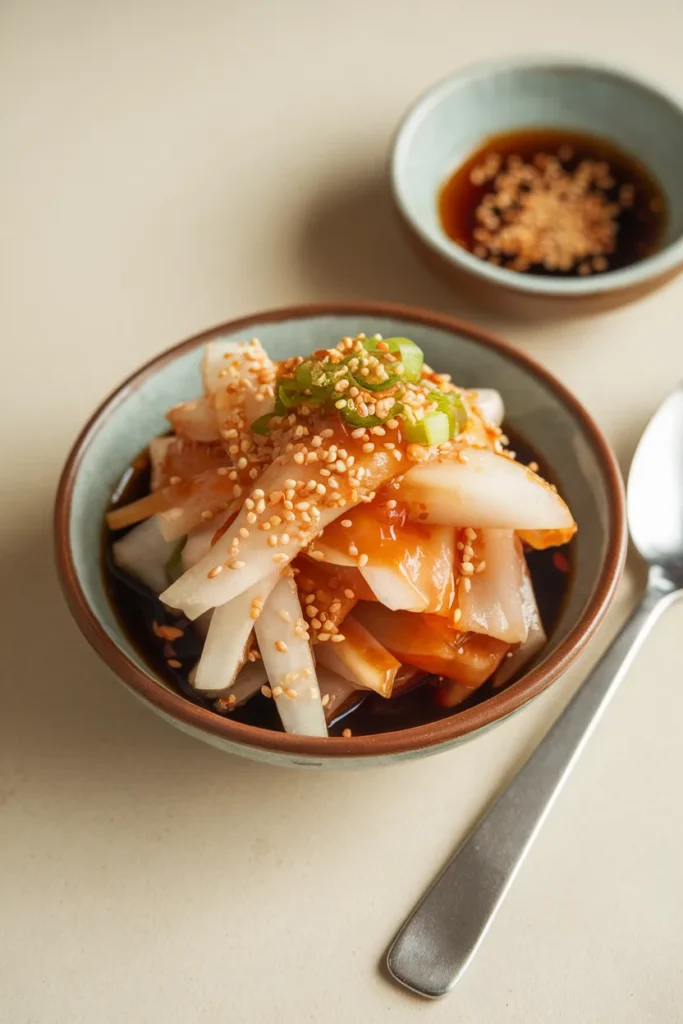
- Spicy Chikin Mu: Add 1-2 tablespoons of gochugaru (Korean red pepper flakes) to the brine. You get that gorgeous orange-red color and a real kick of heat. Absolutely incredible alongside spicy fried chicken.
- Garlic and Ginger Version: Add 2 thinly sliced garlic cloves and a few coins of fresh ginger to the jar before pouring the brine. The radish picks up these flavors beautifully over 24 hours. This is my personal favorite variation – it has so much more depth.
- Apple Cider Vinegar Swap: If you genuinely cannot find rice vinegar, apple cider vinegar works as a substitute. The flavor is slightly fruitier and more robust, less delicate. Still delicious, just different in character.
- Quick Cucumber Version: Use the exact same brine on thinly sliced Persian cucumbers instead of radish for a bright, refreshing side. Skip the turmeric if you want a cleaner look. Ready in just 30 minutes.
- Low-Sugar Version: Reduce sugar to 2 tablespoons and add a tablespoon of honey instead. It changes the flavor profile slightly but keeps the essential sweet-sour balance intact without the full sugar hit.
FAQ – Frequently Asked Questions
Q: Where do I find daikon radish?
Any Asian grocery store will have it – it is a staple. Many large supermarkets now stock it in the produce section near other specialty vegetables. If you genuinely cannot find it, some farmers markets carry it in autumn and winter. It is worth the hunt.
Q: Can I use regular white vinegar instead of rice vinegar?
Technically yes, but it will taste sharper and more aggressive. Rice vinegar is milder and sweeter, which is exactly why it works so well here. Using white distilled vinegar is like replacing your lead actor with an understudy who does not know the lines. It will work, but it will not be quite right.
Q: How long does Korean pickled radish last?
Stored in a sealed glass jar in the fridge, it keeps beautifully for up to 2 weeks. The flavor actually improves over the first few days as the brine fully penetrates the radish. After 2 weeks the texture starts to soften more than ideal, so make a fresh batch.
Q: Does it need to be refrigerated immediately?
Yes. This is a quick refrigerator pickle, not a shelf-stable fermented pickle. Once cooled to room temperature, seal the jar and get it into the fridge. It is not designed to sit out on the counter and it will not keep safely at room temperature.
Q: My radish turned very bright yellow – did I use too much turmeric?
That is exactly what it is supposed to look like. The golden yellow color is the whole aesthetic of chikin mu. Half a teaspoon gives you that signature vivid hue. If you want a paler result, use a quarter teaspoon. But embrace the yellow – it is cheerful and beautiful and people will absolutely ask what it is.
Q: Can I make this without the turmeric?
Sure, but your pickled radish will be pale white instead of that gorgeous golden yellow. The flavor will be essentially the same since turmeric contributes very little taste at this quantity. The visual impact, however, drops significantly. Keep the turmeric. Aesthetics matter in food.
Q: Can I reuse the brine for a second batch?
Yes! Once your first batch of radish is gone, the brine is still perfectly good. Add a fresh batch of diced daikon and refrigerate again. The second batch may be slightly less vibrant in color but the flavor is just as great. You are essentially getting two batches for the price of one.
Final Thoughts
Korean pickled radish is one of those recipes that genuinely surprises people. It looks like it should be complicated – that color! that crunch! that flavor! – but it is one of the simplest things you can make in your kitchen.
Ten minutes of prep, a jar, a fridge, and a little patience is all it takes. And once you have a batch sitting in your refrigerator, you will find yourself reaching for it constantly. On rice bowls. Next to fried chicken. In sandwiches. On tacos. Straight from the jar at 11pm. All valid choices.
Printable Recipe Card
Want just the essential recipe details without scrolling through the article? Get our printable recipe card with just the ingredients and instructions.