You know that 6 p.m. panic? The one where you open the fridge, stare into the void, and somehow expect dinner to materialize out of sheer desperation? We’ve all been there. But here’s the thing — hiding in your fridge right now is probably a chunk of pork belly and half a head of cabbage, and together? They’re about to become the best meal you’ve made this week.
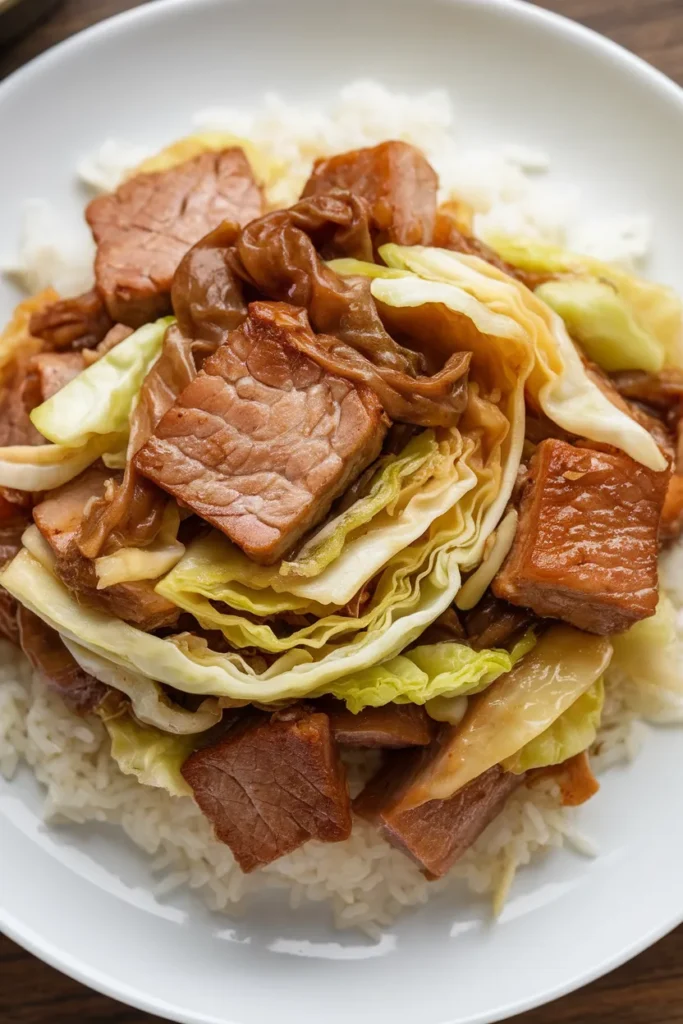
This stir fry is fast, loud, and absolutely unapologetic. It’s got crispy, golden pork belly with those caramelized edges, silky-tender cabbage that soaks up every drop of that savory, garlicky sauce, and it all comes together in one wok in about 25 minutes. Minimal washing up. Maximum satisfaction.
This is weeknight cooking at its finest — no fuss, no fancy equipment, just real food that tastes insanely good. Let’s get into it.
What Makes This Recipe Awesome
Genuinely, where do we start?
- It’s a one-wok wonder. One pan, minimal mess, maximum flavour. Your future self doing the dishes will be very grateful.
- Pork belly is the hero we deserve. When you render that fat down in a hot wok, it turns into something between bacon and pure joy. Crispy outside, melt-in-your-mouth inside. Completely irresistible.
- Cabbage is wildly underrated. It wilts beautifully, absorbs all that gorgeous sauce, and adds a subtle sweetness that balances the salty, umami-rich pork. Give cabbage the respect it deserves.
- It’s done in 25 minutes. Not “25 minutes if you’re a professional chef” — actually 25 minutes. Idiot-proof, even I didn’t mess it up (and I have a complicated relationship with high heat).
- It works with what you’ve got. Flexible ingredients, simple technique, endlessly adaptable. This recipe doesn’t care if you’re missing one thing — there’s always a swap.
IMO, this is the kind of recipe that earns a permanent spot in your weeknight rotation after the very first try.

Shopping List – Ingredients
The Main Event:
- 400g (about 14 oz) pork belly, skin-on or skinless — slice it thin, around 0.5cm. Don’t ask your butcher to do it and then cut it thick yourself. Trust the process.
- Half a medium head of green cabbage, roughly chopped — nothing fancy, just big bite-sized pieces
- 4 cloves garlic, minced (more if you love life)
- 1 tablespoon fresh ginger, grated or finely minced
- 2 spring onions (scallions), sliced — whites and greens separated
The Sauce (mix this before you start — seriously, do it first):
- 3 tablespoons soy sauce, low sodium preferred
- 1 tablespoon oyster sauce — this is what gives it that deep, restaurant-level flavour
- 1 teaspoon sesame oil
- 1 teaspoon sugar or honey
- 1/2 teaspoon white pepper or black pepper
- 1 tablespoon Shaoxing wine or dry sherry — optional but genuinely worth it
For Cooking:
- 1 tablespoon neutral oil (vegetable, sunflower, or canola — not olive oil, it’ll smoke and judge you)
- Chilli flakes or fresh chilli, to taste — optional but encouraged
- Sesame seeds for garnish, also optional but makes everything look 10x more impressive
Step-by-Step Instructions
- Mix the sauce first. Combine the soy sauce, oyster sauce, sesame oil, sugar, white pepper, and Shaoxing wine in a small bowl. Stir until the sugar dissolves. Set it aside and congratulate yourself — the hardest part is genuinely done.
- Prep everything before you heat the wok. Slice the pork belly, chop the cabbage, mince the garlic and ginger, slice the spring onions. Stir fry moves fast. If you’re still chopping when the wok is screaming hot, you’ve already lost.
- Render the pork belly. Heat your wok or large frying pan over medium-high heat. Add the pork belly slices in a single layer — no oil needed yet, the fat will render out. Cook for 4–5 minutes, flipping once or twice, until the edges are golden and crispy. Remove and set aside.
- Build the flavour base. Add a tablespoon of oil to the pork fat already in the wok. Toss in the white parts of the spring onion, garlic, and ginger. Stir constantly for about 60 seconds — you want fragrant, not burnt. Burnt garlic is a one-way ticket to starting over.
- Add the cabbage. Throw in the chopped cabbage and toss it around in all that flavourful fat. Stir fry on high heat for 3–4 minutes until the cabbage starts to wilt but still has a little bite to it. We want tender-crisp, not soggy.
- Return the pork and add the sauce. Add the crispy pork belly back to the wok, pour in the sauce, and toss everything together vigorously. Cook for another 2 minutes until the sauce coats everything in a glossy, fragrant layer.
- Finish and serve. Scatter over the green spring onion tops, sesame seeds, and chilli if using. Serve immediately over steamed rice. Try not to eat it directly from the wok. (No judgment if you do.)
Health Benefits
Yes, this has pork belly in it. Yes, it’s also genuinely nutritious. Both things can be true — here’s the evidence:
- Cabbage: An absolute nutritional overachiever. It’s packed with vitamin C, vitamin K, folate, and fibre. It contains glucosinolates — compounds with documented cancer-protective properties — and supports gut health and digestion. And it costs almost nothing. Cabbage deserves your respect.
- Pork belly: Rich in B vitamins (especially B1, B3, and B12), zinc, selenium, and high-quality complete protein. Yes, it contains saturated fat, but dietary fat is essential for absorbing fat-soluble vitamins and supporting hormone production. Enjoyed in reasonable portions as part of a balanced diet, it absolutely has a place on your plate.
- Garlic: Contains allicin, one of the most studied natural compounds for immune support, antibacterial properties, and cardiovascular health. It also makes everything taste significantly better, which is its own kind of medicine.
- Ginger: A well-documented anti-inflammatory with powerful antioxidant compounds called gingerols. It supports digestion, reduces nausea, and may help lower blood sugar levels. Plus it adds a warmth and depth to this dish that is completely irreplaceable.
- Sesame oil: Rich in healthy unsaturated fats, antioxidants like sesamol and sesamin, and has been linked to reduced inflammation and improved heart health. Also — the flavour it adds is extraordinary.
- Soy sauce: Provides umami (the fifth taste), contains some amino acids and minerals, and adds enormous depth of flavour with very few calories. Opt for low-sodium versions to keep salt intake in check.
Avoid These Mistakes
- Crowding the wok with pork belly. If you pile the slices on top of each other, they’ll steam instead of sear. Work in batches if needed. Crispy edges are the whole point — don’t sacrifice them to laziness.
- Skipping the sauce prep. Mixing the sauce as you go while the wok is screaming hot is a chaos move. Measure everything beforehand. The whole dish takes 25 minutes because of this one habit. You’re welcome.
- Using low heat. Stir fry needs HIGH heat. That’s what gives it the wok hei — that slightly charred, smoky flavour that makes restaurant stir fry taste different from everything you make at home. Get the wok properly hot before anything goes in.
- Overcooking the cabbage. 3–4 minutes, people. You want it wilted and flavourful, not grey and completely surrendered. It should still have a little texture. Overcooked cabbage is a tragedy nobody wants to eat.
- Forgetting to separate spring onion whites and greens. The whites go in early with the garlic (they need heat to soften). The greens go on at the end as a fresh garnish. Mixing them up doesn’t ruin the dish, but you’ll miss that fresh, bright contrast at the end.
- Not tasting before serving. Taste the dish after adding the sauce. Need more saltiness? Add a splash of soy. More sweetness? A pinch of sugar. More heat? Chilli flakes. Season to YOUR taste — that’s the whole point of cooking at home.
Variations You Can Try
- Make it spicy: Add a tablespoon of doubanjiang (chilli bean paste) or gochujang to the sauce. It adds heat, depth, and a gorgeous reddish colour. Absolutely brilliant.
- Swap the pork belly: Use streaky bacon for a shortcut that’s nearly as good. Chicken thighs (sliced thin) or prawns also work beautifully — just adjust cooking times accordingly.
- Add noodles: Toss in cooked egg noodles or udon with the sauce at the end for a complete noodle stir fry. Add a little extra soy sauce to coat everything. Honestly one of the best variations — it turns this into a full one-bowl meal.
- Use purple cabbage: Works exactly the same way and turns the whole dish a dramatic, stunning purple-pink colour when it hits the sauce. Showstopper at a dinner party. Tastes identical, looks wildly impressive.
- Make it vegetarian: Replace pork belly with firm tofu (press it dry, then fry until golden) or king oyster mushrooms sliced thick. Replace oyster sauce with vegetarian oyster sauce or extra soy with a touch of hoisin. You’ll still get all that savoury depth.
- Add a fried egg on top: A crispy-edged fried egg sitting on top of your rice and stir fry is one of life’s great simple pleasures. Break the yolk, let it run into everything. Perfection.
Personal pick: the spicy doubanjiang version is next-level. It takes the dish from “delicious” to “I need to make this twice a week.”
FAQ – Frequently Asked Questions
Can I use a regular frying pan instead of a wok?
Yes, absolutely. A large, heavy-bottomed frying pan (cast iron or stainless steel) works well. The key is still high heat — don’t be timid. A wok is ideal for even heat distribution, but it’s not mandatory.
Can I use pre-sliced pork belly from the supermarket?
That’s actually the ideal starting point. Pre-sliced pork belly saves you time and usually comes at a good consistent thickness. Just pat it dry before cooking — moisture is the enemy of a good sear.
Do I have to use oyster sauce? I don’t have any.
You can substitute with hoisin sauce (slightly sweeter), or just add an extra tablespoon of soy sauce plus a small pinch of sugar. But honestly — buy oyster sauce. It’s inexpensive, lasts forever in the fridge, and it’s a genuine game-changer in stir fries.
My cabbage released a lot of water and the dish looks soupy. What happened?
Heat wasn’t high enough, or the wok was too crowded. Water needs to evaporate quickly — that only happens at high heat with enough space. Next time, cook the cabbage in smaller batches on maximum heat. If it happens mid-cook, just crank the heat and let it cook off.
Can I make this ahead of time?
FYI, stir fry is really best eaten immediately. The texture of the pork and cabbage changes once it sits. That said, leftovers reheated in a hot pan are still delicious — just expect the cabbage to soften further. It’ll still taste great.
How do I stop the garlic from burning?
Keep it moving constantly and don’t walk away. Garlic goes from fragrant to burnt in about 30 seconds at high heat. If things are moving too fast, just pull the wok off the heat briefly. You’re in charge — the stove works for you.
Can I double the recipe?
Yes — but cook it in two batches rather than throwing everything in at once. Doubling the volume in the wok lowers the temperature dramatically, and you’ll end up steaming instead of stir frying. Two quick batches will always beat one crowded, sad batch.
Final Thoughts
Here’s what I love most about this stir fry: it’s the kind of recipe that makes you feel like a proper cook without requiring you to actually be one. One wok, a handful of ingredients, 25 minutes — and you’ve got something that tastes genuinely better than most takeaways.
The pork belly is crispy and rich, the cabbage is tender and flavour-soaked, and that sauce ties everything together in the most satisfying way. It’s loud, it’s quick, it’s deeply delicious.
So the next time 6 p.m. rolls around and you’re staring into the fridge wondering what to make — remember this one.
Printable Recipe Card
Want just the essential recipe details without scrolling through the article? Get our printable recipe card with just the ingredients and instructions.