Scrambled eggs again? Really? You deserve better than that — and so does your breakfast. Enter the frittata: Italy’s gift to lazy cooks, hungry humans, and anyone who has ever opened the fridge at 7 a.m. and wondered what on earth to do with leftover vegetables and a block of cheese.
A frittata is basically an Italian baked egg dish — think of it as a crustless quiche or a grown-up omelette that went to finishing school. It’s hearty, protein-rich, endlessly customizable, and the kind of breakfast that makes you feel like you have your life together even when you absolutely do not.
The best part? You can prep it in 10 minutes and the oven does the rest. One pan, minimal effort, maximum payoff. Let’s make one that’ll actually impress you.
What Makes This Recipe Awesome
Where do we even begin?
- It’s a protein bomb. Eggs, cheese, and any vegetables you throw in — this breakfast keeps you full until lunchtime without requiring a mid-morning snack emergency.
- One pan. That’s it. Oven-safe skillet in, frittata out. The washing up is embarrassingly manageable.
- It works with whatever you’ve got. Sad spinach? Perfect. Half a red pepper? In it goes. Leftover roasted potatoes? Absolutely. The frittata does not judge your fridge situation.
- It’s genuinely idiot-proof. Mix eggs, add fillings, cook briefly on the stovetop, finish in the oven. Even I haven’t managed to ruin one yet — and I once set a timer for the wrong unit of measurement.
- Make-ahead friendly. Cook it Sunday, slice it up, and you’ve got breakfast sorted for three days. That’s meal prep without the meal prep suffering.
IMO, the frittata is the most underrated breakfast in the English-speaking world. Italians have been right about this the whole time.

Shopping List – Ingredients
The Egg Base (non-negotiable):
- 6 large eggs — go free-range if you can, the yolks are richer and the color is genuinely more beautiful
- 1/4 cup whole milk or heavy cream — this is what keeps your frittata from turning into an egg puck
- Salt and black pepper — season generously, eggs need it
The Fillings (this is where you make it your own):
- 1 cup baby spinach — wilts down to almost nothing, adds color and nutrition
- 1/2 red bell pepper, diced — sweet, colorful, and it makes the whole thing look gorgeous
- 1/2 small zucchini, sliced thin — mild flavor, great texture
- 1/4 cup cherry tomatoes, halved — they burst and get jammy in the oven. Worth it.
- 3 cloves garlic, minced — always
- 1/4 cup crumbled feta cheese OR grated Parmesan — both work brilliantly, just different vibes
- Fresh herbs: basil, chives, or flat-leaf parsley for finishing
- 1 tbsp olive oil for the pan
Step-by-Step Instructions
- Preheat your oven to 375°F (190°C). Do this first. Not halfway through cooking. First. This is not optional advice.
- Whisk together the eggs, milk, salt, and pepper in a bowl until fully combined and slightly frothy. Set aside. Don’t over-whisk — you want eggs, not foam.
- Heat olive oil in a 10-inch oven-safe skillet (cast iron is ideal) over medium heat. Add the garlic and sauté for 30 seconds until fragrant.
- Add the bell pepper and zucchini. Cook for 3–4 minutes until softened. Add the spinach and stir until just wilted, about 60 seconds.
- Scatter the cherry tomatoes over the vegetables. Give everything a gentle toss to distribute evenly across the pan.
- Pour the egg mixture evenly over the vegetables. Tilt the pan slightly to make sure it fills all the gaps. Scatter crumbled feta across the top. Do not stir.
- Cook on the stovetop over medium-low heat for 3–4 minutes until the edges start to set but the center is still wobbly. This is exactly when you want to stop.
- Transfer the skillet to the oven. Bake for 12–15 minutes until the centre is just set and the top is lightly golden. It should have a very slight jiggle — it firms up as it cools.
- Remove from the oven and let it rest for 5 minutes before slicing. Scatter fresh herbs over the top. Serve straight from the pan — it’s part of the charm.
Health Benefits
This isn’t just a tasty breakfast — it’s working for you from the first bite:
- Eggs: Complete protein sources, meaning they contain all nine essential amino acids. They’re also rich in choline (critical for brain function), lutein and zeaxanthin (supporting eye health), and vitamins B12 and D. Whole eggs are one of the most nutrient-dense foods available. Yes, even the yolk.
- Spinach: Packed with iron, folate, vitamins A, C, and K, and powerful antioxidants including quercetin and kaempferol, which have documented anti-inflammatory properties. It also provides magnesium, which most people are quietly deficient in.
- Bell pepper: Exceptional source of vitamin C — one red bell pepper contains more than twice the daily recommended intake. Also rich in vitamin A, B6, and folate. The red variety specifically contains lycopene, a powerful antioxidant linked to heart health.
- Zucchini: Low in calories, high in vitamin C and potassium, and a good source of antioxidants including lutein and zeaxanthin. It adds volume and texture to the frittata while keeping the calorie count genuinely modest.
- Feta cheese: Lower in calories and fat than most hard cheeses while still delivering calcium, phosphorus, and protein. It also contains probiotics that support gut health — particularly when made from sheep or goat milk.
- Olive oil: Rich in heart-healthy monounsaturated fats and oleocanthal, a compound with anti-inflammatory properties comparable to low-dose ibuprofen. It also aids in the absorption of fat-soluble vitamins from the vegetables.
- Garlic: Allicin, the active compound released when garlic is chopped or crushed, supports immune function, cardiovascular health, and has broad-spectrum antibacterial properties. Also makes everything taste significantly better, which is its own health benefit.
FYI: a generous slice of this frittata delivers roughly 20–25g of protein — enough to keep blood sugar stable and hunger at bay for hours. Breakfast that actually works.
Avoid These Mistakes
- Not patting your vegetables dry. Watery vegetables (especially zucchini and tomatoes) release liquid as they cook and can make the frittata soggy. Sauté them properly first and let any excess moisture cook off before adding the eggs.
- Skipping the stovetop step. The 3–4 minutes on the hob before the oven matters. It sets the bottom and edges so the frittata holds its shape. Going straight into the oven without this step gives you raw bottom syndrome. Not ideal.
- Using the wrong pan. The pan must be oven-safe. If you’re not sure about your skillet, now is a great time to check before the handle melts off in a 375-degree oven. Lesson learned vicariously — you’re welcome.
- Overcooking it. A fully set, firm frittata is a dry frittata. Pull it out when the centre still has a gentle jiggle. It carries over from the residual heat and firms up perfectly as it rests. Trust the wobble.
- Under-seasoning the egg mixture. Eggs need more salt than you think. Season the egg base generously before adding it to the pan. Tasting bland scrambled eggs before you add them isn’t helpful — taste the raw mixture and season assertively.
- Overcrowding the fillings. Too many vegetables means too much moisture and a frittata that never quite sets properly. Stick to about 1.5–2 cups of cooked fillings total for a 6-egg frittata. Edit your vegetable choices if necessary.
Variations You Can Try
- Classic Italian: Thin slices of zucchini, sun-dried tomatoes, fresh basil, and Parmesan. Simple, traditional, and deeply satisfying. If it ain’t broke, don’t fix it.
- Mediterranean: Kalamata olives, roasted red peppers, crumbled feta, and fresh oregano. Bold, briny, punchy. Goes beautifully with a simple green salad for a lazy brunch.
- Smoked Salmon and Cream Cheese: Fold in flaked smoked salmon and small spoonfuls of cream cheese before baking. The cream cheese goes slightly molten and creates pockets of richness. Wildly good. Weekend energy only.
- Spicy Chorizo and Potato: Dice and fry Spanish chorizo with cooked potato cubes before adding the egg. The chorizo fat flavors the whole thing orange and the potato makes it seriously filling. Serve at brunch and watch it vanish.
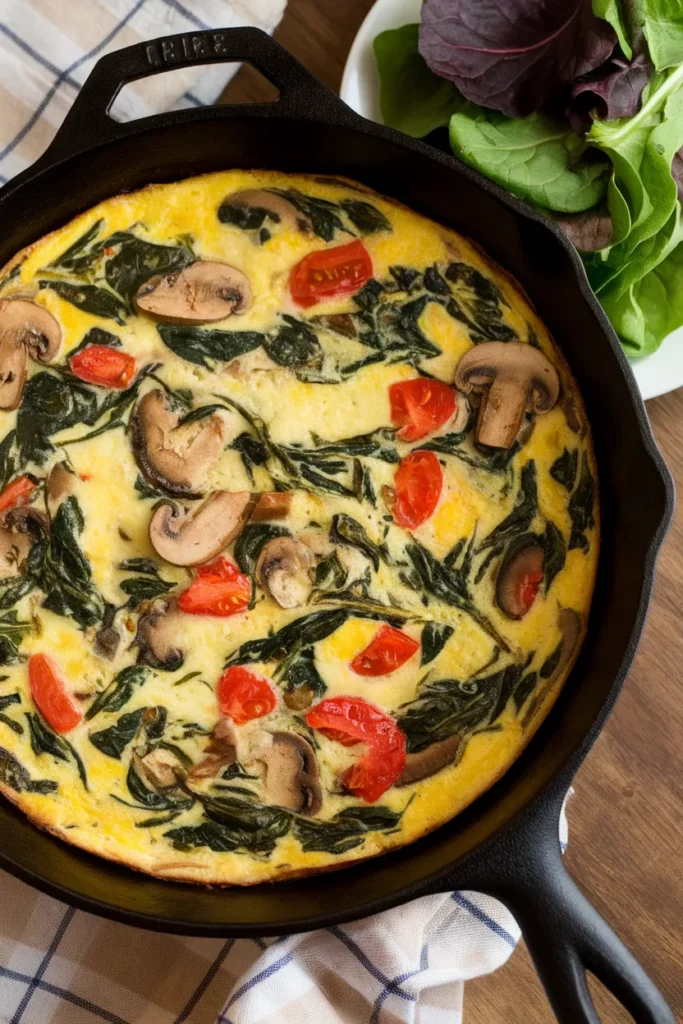
- Mushroom, Gruyère, and Thyme: Sauté sliced cremini mushrooms until properly browned (not steamed — actually brown). Add Gruyère and fresh thyme. Rich, earthy, French bistro vibes. One of my personal top-three versions.
- Vegan Frittata: Chickpea flour batter (3 tbsp chickpea flour whisked with 1/4 cup water per egg replaced) works as a surprisingly decent egg substitute. Add nutritional yeast for a cheesy note. Not identical, but genuinely impressive for a plant-based version.
- Leftovers Frittata: Roasted vegetables from last night? Cold pasta? Leftover sausage? In they go. The frittata is the original zero-waste breakfast and it doesn’t require you to plan anything in advance. This is the variation I make most often and I will not apologize for that.
Personal note: the mushroom, Gruyère, and thyme version is objectively the most elegant, but the leftovers version is the most satisfying because it requires the least effort and costs almost nothing.
FAQ – Frequently Asked Questions
Can I make this frittata ahead of time?
Absolutely — and it’s genuinely better after a night in the fridge. The flavors meld, the texture firms up slightly, and slicing it cold is much easier than slicing it fresh. Store covered in the fridge for up to 4 days. Reheat individual slices in a low oven or eat at room temperature — both work.
Can I make a frittata without an oven-safe skillet?
You can finish it entirely on the stovetop over very low heat with a lid on — it just takes longer (around 12–15 minutes) and the top won’t get that golden finish. Alternatively, cook the egg base in a regular pan and transfer it to a greased baking dish before the oven step. Problem solved.
My frittata is always rubbery. What am I doing wrong?
You’re overcooking it. Full stop. Pull it from the oven when the centre still jiggles gently. It will continue to cook from the residual heat of the pan and the eggs will set fully as it rests. A rubbery frittata is a patient frittata that stayed in the oven too long.
Do I have to use milk or cream? Can I skip it?
Technically yes, but why would you? The dairy is what gives the frittata its creamy, custardy texture. Without it, the eggs set harder and drier. A quarter cup is all it takes. Use whatever dairy you have — whole milk, cream, oat milk if needed. Even a small amount makes a meaningful difference.
Can I freeze a frittata?
Yes. Slice it, wrap individual portions in parchment, and freeze for up to 2 months. Reheat from frozen in a 325°F oven for about 15 minutes. It doesn’t emerge quite as custardy as fresh but it’s still perfectly good — and having breakfast ready in the freezer is a gift you give your future self.
What size pan do I need?
A 10-inch skillet is ideal for a 6-egg frittata — it gives a good depth without making the eggs too thin. Use an 8-inch pan for a thicker, more generous slice. A 12-inch pan will work but the frittata will be thinner and will cook faster, so watch it closely.
Do I need to pre-cook the vegetables?
Yes, always. Raw vegetables contain moisture that releases during baking and makes the frittata soggy. Sauté them first until softened and any excess water has cooked off. This step takes 5 minutes and it’s the difference between a beautiful frittata and a sad, wet one.
Final Thoughts
Here’s the thing about a healthy breakfast frittata — it sounds like effort, but it really isn’t. Once you’ve made it twice, you’ll do it on autopilot. Whisk, sauté, pour, bake. Twenty-five minutes from fridge to table and you’ve got something genuinely nourishing, legitimately delicious, and impressive enough to serve to guests without apologizing.
It’s the breakfast that says “I have my life sorted” even when the answer to that is complicated. And isn’t that what breakfast is really for?
Make it this weekend. Double the recipe and eat it all week. Experiment with whatever’s in your fridge. Add cheese. Add more cheese. Make it yours.
Printable Recipe Card
Want just the essential recipe details without scrolling through the article? Get our printable recipe card with just the ingredients and instructions.